
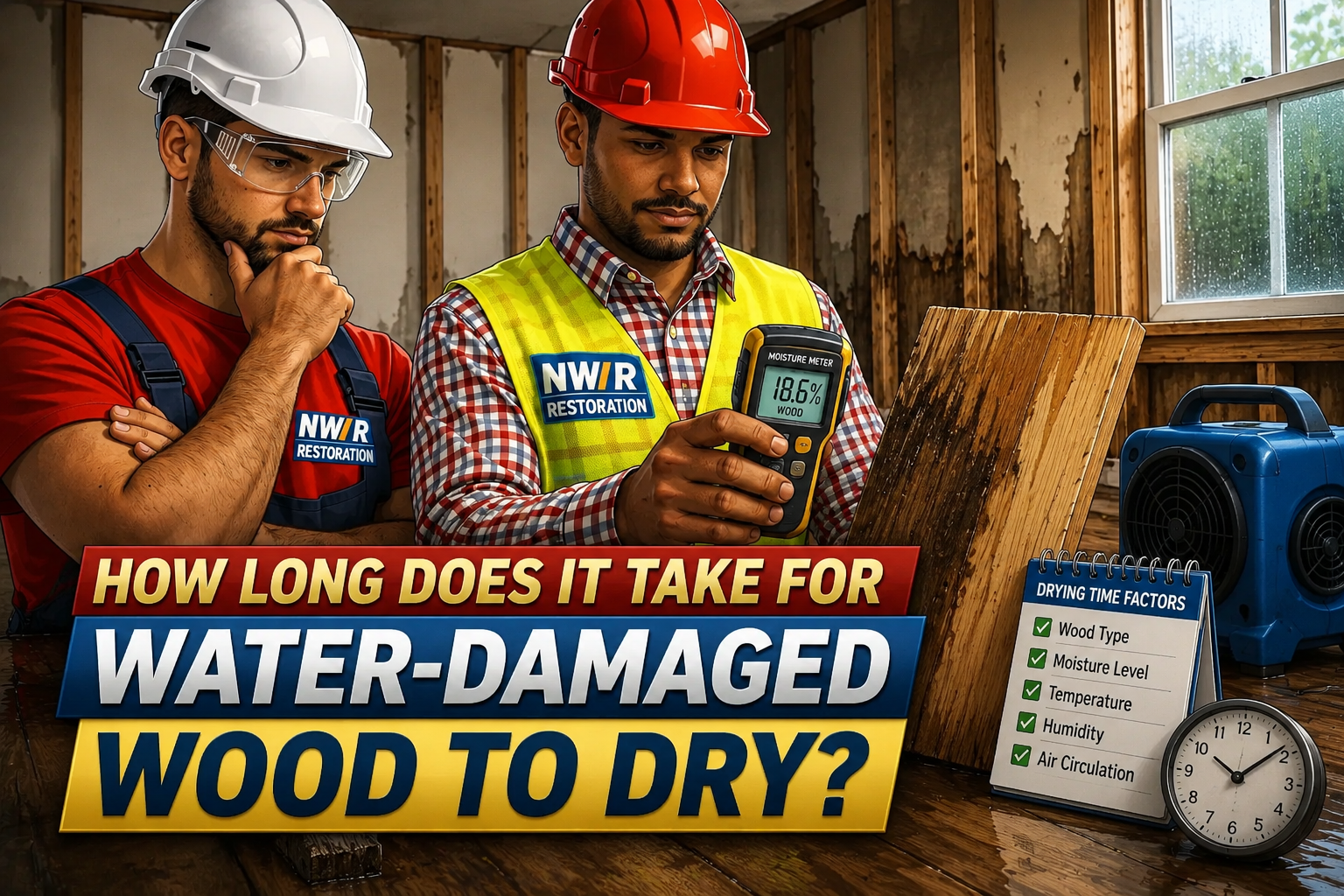
Water damage can turn a small leak into a major property problem surprisingly quickly. Wood is especially vulnerable because it absorbs and holds moisture inside its fibers. While a wet surface may appear dry after a few hours, the wood underneath can remain damp for days or even weeks.
Understanding water-damaged wood drying time is important because drying too slowly can lead to mold growth, structural deterioration, unpleasant odors, and expensive repairs. On the other hand, rushing the process without addressing the source of the moisture can leave hidden water behind.
So, how long does water-damaged wood actually take to dry?
In many situations, properly treated wood can dry within a few days. However, the exact timeframe depends on the amount of water, type of wood, temperature, humidity, airflow, thickness, and whether moisture has become trapped behind walls, flooring, or other materials.
How Long Does Water-Damaged Wood Take to Dry?
Under favorable conditions, moderately water-damaged wood may dry in approximately three to seven days. More extensive damage can take a week or longer, particularly when wood is thick, enclosed, or exposed to significant amounts of water.
The drying process should not be based simply on how the wood feels to the touch. Professional emergency restoration teams use moisture meters and other equipment to determine whether the material has reached an acceptable moisture level.
For example, a wooden floor might feel dry on the surface while retaining substantial moisture underneath. Similarly, framing inside a wall can remain damp even after the surrounding drywall appears relatively normal.
Why Wood Can Look Dry Before It Is Actually Dry
One of the most common mistakes homeowners make after water damage is assuming that wood is dry because the surface no longer feels wet.
Wood absorbs water into its internal structure. Surface moisture may evaporate relatively quickly while deeper moisture remains trapped.
This is particularly concerning around:
- Subfloors
- Wall framing
- Cabinets
- Hardwood flooring
- Structural beams
- Door and window framing
- Areas beneath appliances
A professional moisture inspection can identify damp areas that are not obvious during a visual inspection.
Moisture readings can then be monitored throughout the drying process rather than relying on appearance alone.
Special Considerations for Water Damage in Kennewick, WA
Properties in Kennewick and the surrounding area can experience water damage from plumbing failures, appliance leaks, roof problems, storms, and other sources.
When water damage occurs alongside another emergency, such as a fire, restoration can become more complex. Fire Damage in Kennewick projects, for example, may involve water from firefighting efforts as well as smoke and structural damage.
In these situations, addressing moisture promptly is important because multiple forms of property damage can interact.
A professional assessment can help determine which materials can be cleaned and restored and which may require replacement.
What Happens If Water-Damaged Wood Is Not Dried Quickly?
Delaying drying can allow relatively manageable water damage to develop into a much larger restoration project.
Mold Growth
Mold can develop when moisture remains present for an extended period, particularly when other favorable conditions exist.
Once mold becomes established, simply drying the wood may no longer be sufficient. Additional cleaning, containment, removal, or remediation may be necessary depending on the extent of contamination.
Wood Rot and Deterioration
Persistent moisture can weaken wood over time.
Rot may compromise flooring, framing, trim, cabinets, and other wooden components. The longer moisture remains trapped, the greater the potential for deterioration.
Not every wet piece of wood will immediately rot, but prolonged exposure increases the risk.
Unpleasant Odors
Damp materials can develop musty odors.
These odors may persist even after visible water has disappeared because moisture can remain trapped in hidden areas.
If the smell continues after drying efforts, it may indicate that additional moisture or contamination remains.
Structural Problems
Water damage involving structural wood deserves particular attention.
Floor joists, wall framing, beams, and other structural components can be affected by prolonged moisture exposure. If the damage is extensive, an appropriate professional assessment may be necessary to determine whether materials can be dried and preserved or require replacement.
Can You Dry Water-Damaged Wood Yourself?
Minor water exposure can sometimes be addressed by homeowners when the source is stopped quickly, and the affected material is accessible.
For example, a small spill on a finished wooden surface may require little more than prompt cleanup and ventilation.
Larger incidents are different.
If water has entered walls, flooring, ceilings, insulation, crawl spaces, or structural components, professional equipment and moisture monitoring can make a significant difference.
When Should You Replace Water-Damaged Wood?
Drying is often preferable to replacement when wood can be safely restored.
However, replacement may become necessary when material has experienced severe deterioration, structural damage, contamination, or other conditions that prevent effective restoration.
For example, visibly rotted wood generally cannot be restored simply by drying it.
Similarly, heavily damaged composite or engineered materials may not return to their original condition after significant water exposure.
The decision should be based on the material’s condition rather than simply its age or appearance.
Does Water Damage Always Mean Mold?
No.
Water exposure does not automatically mean that mold will develop. The risk depends on factors such as moisture duration, temperature, humidity, material type, and environmental conditions.
The important point is to address moisture promptly.
The faster affected materials are properly dried, the less opportunity there is for prolonged dampness to create an environment favorable to microbial growth.
If mold is already suspected or visible, restoration professionals can help determine the appropriate next steps.
What About Older Homes and Renovation Projects?
Water damage can be more complicated in older properties because building materials and previous renovations may introduce additional considerations.
For example, some older materials may require specialist assessment before demolition or disturbance.
If a restoration project involves an older property where asbestos-containing materials are suspected, homeowners should not disturb those materials themselves. An asbestos testing company can determine whether testing is appropriate before renovation or removal work begins.
This is especially important when water damage requires opening walls, removing flooring, or undertaking extensive reconstruction.
Water Damage and Property Restoration
Drying is only one part of restoring a property after serious water damage.
Once materials are dry and the affected areas have been evaluated, additional work may be necessary. This can include replacing damaged drywall, flooring, cabinetry, insulation, trim, or other components.
In more extensive situations, restoration may overlap with commercial and residential construction, particularly when structural components or large sections of a property require reconstruction.
Renovation requirements can vary significantly depending on the extent of the damage.
Some properties may need relatively minor repairs, while others require substantial rebuilding. Residential commercial remodeling services may become relevant when restoration involves redesigning or reconstructing affected areas.
How to Know When Wood Is Completely Dry
The most reliable way to determine whether water-damaged wood has dried sufficiently is to use appropriate moisture measurement rather than relying solely on touch.
A restoration professional can establish baseline readings, monitor affected materials, and compare them with unaffected areas or accepted drying targets.
The exact acceptable moisture level varies according to the material and application, so there is no universal number that applies to every piece of wood in every building.
The key is consistent monitoring.
When moisture readings stabilize at appropriate levels, and the affected environment has been properly addressed, the drying phase can move toward completion.
How Can You Prevent Future Water Damage?
Once a water-damage incident has been resolved, prevention becomes the next priority.
Regularly inspect plumbing connections, washing machine hoses, water heaters, roofs, gutters, and other potential sources of leaks.
Pay attention to early warning signs such as:
- Musty odors
- Discoloration
- Peeling paint
- Swollen flooring
- Soft wood
- Water stains
- Unexplained increases in humidity
A small leak is generally easier and less expensive to address than prolonged hidden moisture.
Installing leak detection devices in vulnerable areas can also provide an early warning when water is detected.
Need professional help after water damage? Visit the Contact page to request an assessment and discuss the right restoration solution for your property.
Final Thoughts
The answer to water-damaged wood drying time depends on the circumstances. In favorable conditions, some wood can dry within several days, while heavily saturated or enclosed materials may require considerably longer.
The most important factor is not simply how many days have passed. Proper drying requires removing the water source, controlling humidity, creating effective airflow, and monitoring moisture until the affected materials have reached an appropriate condition.
FAQs
1. How long does water-damaged wood take to dry?
Water-damaged wood typically takes three to seven days to dry under favorable conditions. Heavily saturated, thick, or enclosed wood may take a week or longer. Drying time depends on factors such as moisture level, humidity, temperature, airflow, and the type of wood.
2. How can you tell if water-damaged wood is completely dry?
Wood should not be judged as dry based only on how it feels. Moisture meters can provide more reliable readings and help identify moisture trapped beneath surfaces or inside structural components. Restoration professionals can monitor moisture levels throughout the drying process.
3. What happens if water-damaged wood is not dried quickly?
If wet wood remains damp for too long, it can increase the risk of mold growth, wood rot, unpleasant odors, and structural deterioration. Hidden moisture behind walls, floors, or cabinets can make the problem worse if it is not identified and addressed promptly.
4. Can you dry water-damaged wood yourself?
Minor spills or limited water exposure may sometimes be handled with prompt cleanup, ventilation, and airflow. However, if water has entered walls, flooring, ceilings, crawl spaces, insulation, or structural wood, professional drying equipment and moisture monitoring may be necessary.
5. When should water-damaged wood be replaced instead of dried?
Wood may need to be replaced when it has severe deterioration, visible rot, structural damage, contamination, or damage that prevents effective restoration. If the material can be safely dried and restored, drying is often preferable to replacement.


