
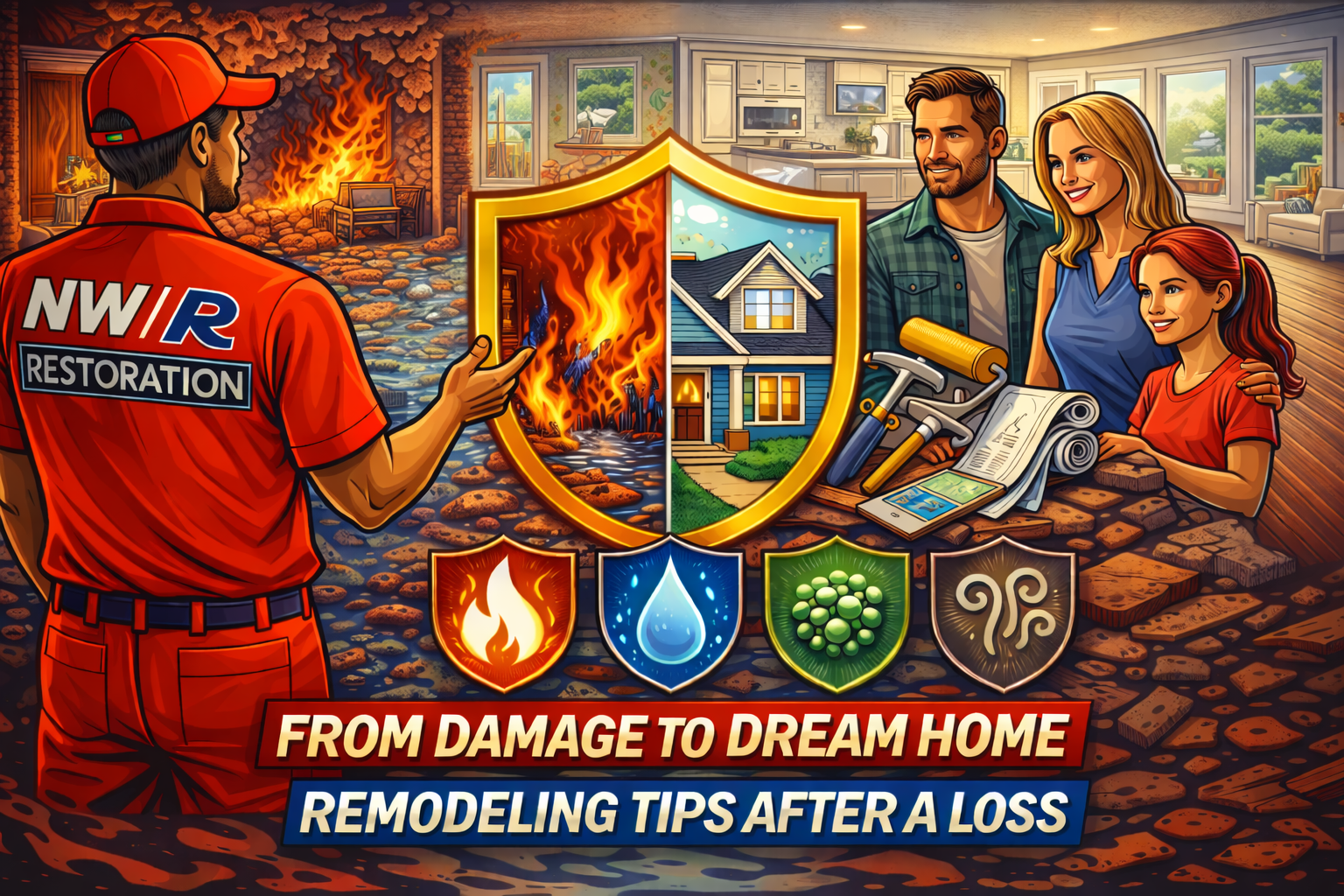
Few experiences are as overwhelming as walking into your home after a fire or major water event. The smell of smoke, the sight of soaked drywall, warped flooring, or charred framing can make it hard to imagine recovery, let alone transformation. But rebuilding after a loss is not just about restoring what was there before. With the right strategy, team, and vision, you can turn a devastating situation into an opportunity to create something even better.
Whether you’re navigating Fire Damage Restoration Richland WA or seeking help for Water Damage Restoration Richland WA, understanding the full restoration and remodeling journey empowers you to move forward with confidence.
Step 1: Act Quickly With Emergency Stabilization
Time is critical after fire or water damage. Even a short delay can increase repair costs and structural deterioration.
Professional emergency restoration services focus on immediate stabilization, including:
- Securing the property with board-ups
- Roof tarping to prevent further exposure
- Water extraction and drying
- Smoke and soot cleanup
- Temporary structural support
Working with an experienced emergency restoration contractor ensures hazards are addressed before rebuilding begins.
For example, after a fire, lingering smoke particles can corrode metals and damage electronics if not properly treated. After flooding, moisture trapped behind walls can lead to mold growth within 24–48 hours. Immediate action protects both your property and your health.
Step 2: Conduct a Thorough Damage Assessment
Once the property is secured, professionals perform a detailed inspection to determine the full extent of damage.
Fire Damage Evaluation Includes:
- Structural integrity of framing
- Roof and attic damage
- Electrical system safety
- Smoke infiltration in HVAC systems
- Insulation and drywall assessment
Water Damage Evaluation Includes:
- Moisture mapping behind walls
- Subfloor condition
- Foundation stability
- Mold risk assessment
Experts specializing in Fire Damage Restoration, Richland, WA, use advanced tools such as thermal imaging cameras and moisture meters to detect hidden issues.
Similarly, Water Damage Restoration Richland, WA professionals ensure every wet surface is fully dried before reconstruction begins. Skipping this step can cause future mold growth or structural decay.
Step 3: Don’t Overlook Environmental Testing
Many homes, particularly older properties, may contain hazardous materials that become disturbed during fire or demolition.
Before rebuilding, consider:
- asbestos testing
- Hiring a certified asbestos testing company
- comprehensive asbestos and mold testing
Asbestos can be present in insulation, flooring, roofing, and even textured ceilings. If disturbed without proper containment, it poses serious health risks.
Mold testing is equally important after water damage. Even small leaks can lead to microbial growth inside walls, which may not be visible to the naked eye.
Addressing environmental concerns early keeps your project compliant, safe, and on schedule.
Step 4: Choose a Contractor Who Handles Restoration and Reconstruction
One of the biggest decisions you’ll make is selecting the right team.
Many homeowners benefit from working with companies experienced in both commercial and residential construction and restoration services. This integrated approach provides:
- Single-point project management
- Coordinated scheduling
- Streamlined communication
- Greater accountability
A contractor offering residential & commercial construction services can guide your project from emergency response to final finishes without requiring you to juggle multiple vendors.
Step 5: Shift From Restoration to Renovation
Once structural repairs are complete, you enter the most exciting phase: transformation.
Restoration returns your home to pre-loss condition. Remodeling improves it beyond what it was.
Many homeowners incorporate:
- Open floor plans
- Expanded kitchens
- Upgraded cabinetry
- Modern lighting systems
- Spa-style bathrooms
- Energy-efficient windows
- Smart home automation
Instead of recreating the past, you have the opportunity to design your future. Professionals offering residential and commercial remodeling services often help homeowners rethink layout and function during this phase.
Step 6: Build Back Better, Not Just the Same
After a loss, resilience becomes a priority. Smart rebuilding reduces risk in future disasters.
Fire-Resistant Upgrades
- Fire-rated drywall
- Non-combustible siding
- Class A roofing materials
- Ember-resistant attic vents
Water-Resistant Improvements
- Waterproof flooring options
- Improved drainage systems
- Sump pumps with battery backups
- Sealed foundations
During Fire Damage Restoration in Richland, WA, projects, upgrading to safer materials can significantly improve long-term durability.
Similarly, Water Damage Restoration Richland WA experts may recommend improved waterproofing strategies to prevent repeat issues.
Step 7: Understand Insurance and Budget Planning
Insurance typically covers restoring your property to its pre-loss condition. However, upgrades or layout changes may require out-of-pocket investment.
Helpful tips include:
- Keep detailed documentation of damage
- Save receipts for temporary living expenses
- Request itemized repair estimates
- Communicate clearly with adjusters
A contractor experienced in insurance coordination can simplify this process and advocate on your behalf.
Step 8: Create a Realistic Timeline
Restoration and remodeling projects follow a structured sequence:
- Emergency stabilization
- Damage assessment
- Environmental testing
- Demolition and debris removal
- Structural repairs
- Electrical, plumbing, and HVAC work
- Insulation and drywall installation
- Interior finishes
- Final inspections
Timelines vary depending on severity and material availability. Clear communication with your emergency restoration contractor prevents misunderstandings.
Step 9: Focus on Emotional Recovery
Rebuilding after a disaster is not only a physical process, it’s emotional. You may experience:
- Stress about finances
- Grief over lost memories
- Fatigue from decision-making
- Anxiety about future risks
Taking an active role in design decisions can be empowering. Turning loss into improvement creates a sense of renewal and hope.
Step 10: Upgrade Energy Efficiency and Sustainability
Post-loss remodeling presents a unique opportunity to invest in:
- Better insulation
- Energy-efficient HVAC systems
- LED lighting
- Smart thermostats
- Solar panel readiness
Modern upgrades reduce monthly utility costs while improving comfort.
Step 11: Commercial Property Considerations
Businesses affected by fire or flooding face additional challenges, including:
- Operational downtime
- Revenue disruption
- Employee safety concerns
Companies specializing in commercial and residential construction understand how to prioritize business continuity during restoration.
Incorporating residential commercial renovation services into commercial rebuilds allows property owners to modernize spaces while restoring operations.
Step 12: Preventive Maintenance for the Future
Once your dream home is complete, ongoing maintenance is essential. Preventative measures include:
- Regular roof inspections
- Cleaning gutters
- Servicing HVAC systems
- Installing smoke detectors and leak sensors
- Maintaining proper drainage around the foundation
Proactive care reduces the likelihood of another emergency.
Turning Loss Into Opportunity
Although fire or water damage can feel devastating, it also creates space for reinvention.
With proper planning and expert guidance, your home can:
- Function more efficiently
- Reflect modern design trends
- Provide improved safety
- Increase property value
- Enhance daily comfort
By partnering with experienced professionals in Fire Damage Restoration Richland WA and Water Damage Restoration Richland WA, you gain the expertise needed to rebuild smarter. Call now for immediate Fire or Water Damage Restoration in Richland, WA.
Conclusion
Recovering from fire or water damage is never easy, but it can be the beginning of something better. With fast emergency response, thorough environmental testing, careful planning, and the right restoration team, your property can be rebuilt stronger, safer, and more beautiful than before. What starts as a crisis can evolve into an opportunity to modernize your layout, upgrade materials, improve energy efficiency, and enhance long-term resilience.
Frequently Asked Questions
1. How quickly should restoration begin after a fire or flood?
Immediately. Rapid response minimizes structural damage and prevents mold growth.
2. Can I remodel while restoring my home?
Yes. Many homeowners integrate remodeling upgrades into the restoration process.
3. Is asbestos testing required?
If your home was built before the 1980s, asbestos testing is highly recommended before demolition.
4. How long does a full restoration and remodeling project take?
Most projects take several weeks to a few months, depending on damage severity.
5. Does insurance cover upgrades?
Insurance typically covers restoration to pre-loss condition. Upgrades may require additional funding.


