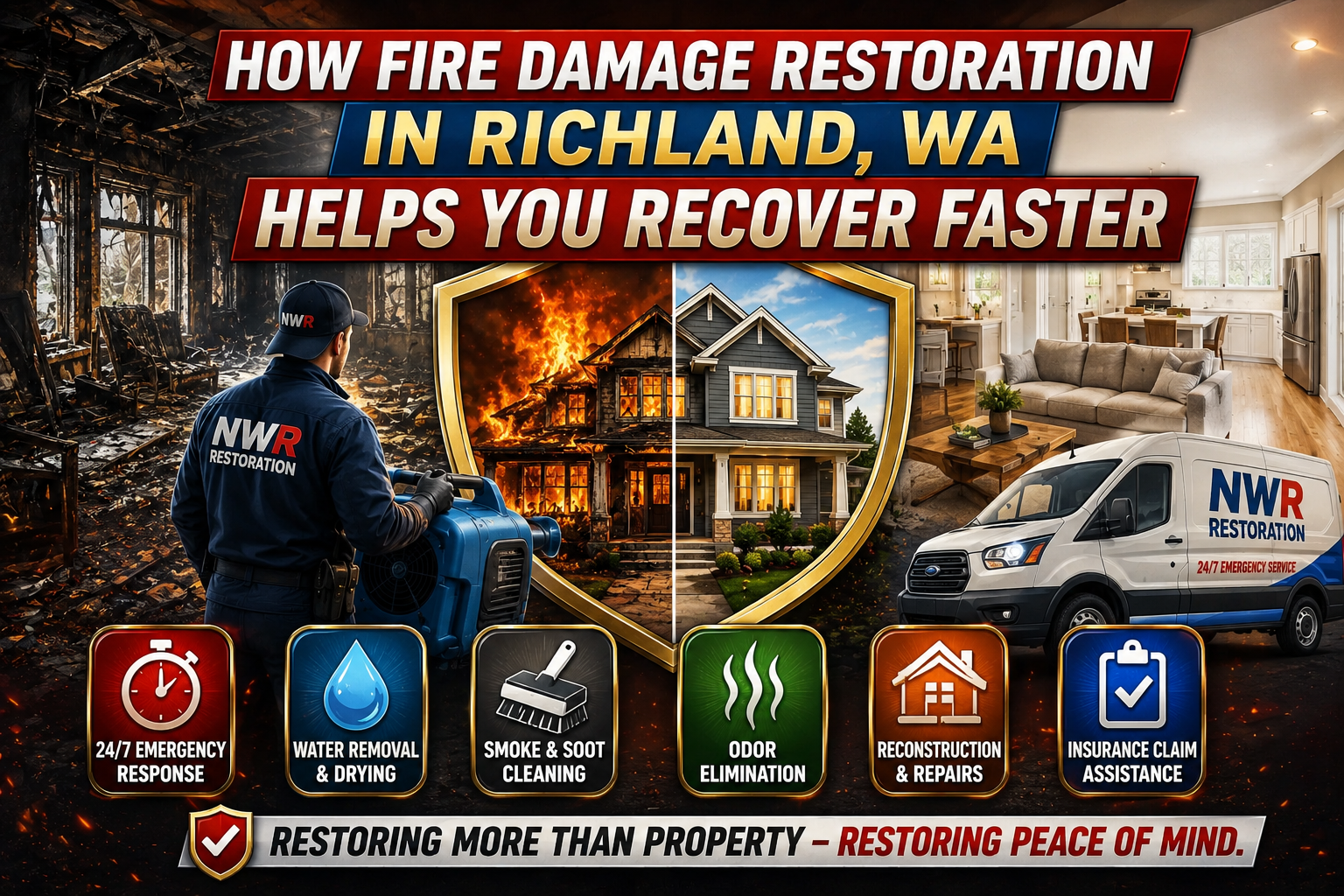
Experiencing a fire in your home or business can be one of the most devastating events a property owner faces. Beyond the visible destruction caused by flames, fire often leaves behind smoke damage, soot contamination, water intrusion from firefighting efforts, structural concerns, and emotional stress. The recovery process can feel overwhelming, especially when you’re unsure where to begin.
Fortunately, professional Fire Damage Restoration Richland WA services can help property owners navigate the aftermath of a fire and return their homes or businesses to safe, functional conditions as quickly as possible. Restoration professionals have the expertise, equipment, and resources needed to assess damage, mitigate further losses, and coordinate repairs efficiently.
Whether the fire was minor or catastrophic, prompt restoration plays a critical role in minimizing damage, reducing costs, and accelerating recovery. In this comprehensive guide, we’ll explore how fire damage restoration works, why fast action matters, and how professional restoration services help homeowners and businesses recover faster after a fire.
Understanding the Impact of Fire Damage
Many people assume that fire damage is limited to areas directly affected by flames. In reality, the effects of a fire often extend throughout the entire property.
Common forms of fire-related damage include:
- Structural damage
- Smoke contamination
- Soot residue
- Water damage from firefighting efforts
- Electrical system damage
- HVAC contamination
- Odor infiltration
- Damage to personal belongings
Even areas untouched by flames may suffer significant damage due to smoke migration and water exposure.
Because multiple types of damage often occur simultaneously, professional restoration is essential for comprehensive recovery.
Why Immediate Restoration Matters
Time is one of the most important factors after a fire.
Delaying restoration can lead to:
- Additional structural deterioration
- Permanent smoke staining
- Corrosion of metal surfaces
- Mold growth from water exposure
- Lingering odors
- Increased repair costs
The sooner restoration professionals begin mitigation efforts, the greater the opportunity to salvage materials and reduce long-term damage.
Rapid response helps stabilize the property and create a clear path toward recovery.
Step 1: Emergency Response and Property Stabilization
The restoration process typically begins with emergency response services.
When restoration professionals arrive, they assess:
- Fire severity
- Structural stability
- Safety hazards
- Utility concerns
- Water intrusion
Immediate stabilization measures may include:
- Board-up services
- Roof tarping
- Temporary fencing
- Water extraction
- Hazard removal
These actions help prevent additional damage while the restoration plan is developed.
Many restoration providers offer 24/7 emergency restoration services because damage continues even after the fire is extinguished.
Step 2: Comprehensive Damage Assessment
A detailed inspection allows restoration professionals to understand the full scope of the damage.
Assessment areas typically include:
Structural Components
- Walls
- Ceilings
- Roof systems
- Flooring
- Framing
Smoke and Soot Damage
Inspectors evaluate contamination levels throughout the property.
Water Damage
Fire suppression efforts often leave significant moisture behind.
Personal Belongings
Furniture, appliances, electronics, and personal items are assessed for restoration potential.
The assessment forms the foundation for the restoration strategy.
Step 3: Water Removal and Drying
Many fire-damaged properties also suffer water damage.
Firefighters often use thousands of gallons of water to extinguish fires, leaving behind significant moisture.
Professional drying may involve:
- Water extraction equipment
- Air movers
- Dehumidifiers
- Moisture monitoring systems
Without proper drying, secondary damage such as mold growth can occur.
This phase shares similarities with projects involving Water Damage Kennewick WA restoration, where moisture control is essential to protecting structural materials and indoor air quality.
Step 4: Smoke and Soot Removal
Smoke and soot can spread far beyond the area affected by flames.
Soot residues may:
- Stain surfaces
- Damage electronics
- Corrode metals
- Create persistent odors
Professional cleaning techniques include:
HEPA Vacuuming
Removes loose soot particles.
Specialized Cleaning Agents
Break down stubborn smoke residues.
Dry Cleaning Methods
Used for delicate materials.
Surface Restoration
Restores walls, ceilings, and fixtures.
Proper soot removal is critical because residues can continue causing damage if left untreated.
Restoring Personal Belongings
Many property owners worry most about their personal possessions after a fire.
Professional restoration companies often provide content restoration services for:
- Furniture
- Electronics
- Photographs
- Documents
- Clothing
- Family heirlooms
Specialized cleaning and restoration methods may help recover items that initially appear unsalvageable.
While not every item can be restored, professional intervention often increases recovery rates significantly.
The Role of Reconstruction Services
Once mitigation and cleanup are complete, rebuilding begins.
Restoration companies frequently coordinate:
- Drywall replacement
- Flooring installation
- Painting
- Roofing repairs
- Electrical work
- Plumbing repairs
Many providers also offer residential & commercial construction services that streamline the rebuilding process and reduce project delays.
Having a single provider manage restoration and reconstruction often improves communication and efficiency.
Fire Restoration for Commercial Properties
Businesses face unique challenges after a fire.
Every day of downtime can result in:
- Lost revenue
- Customer disruptions
- Employee displacement
- Operational challenges
Commercial restoration focuses on:
- Rapid stabilization
- Business continuity planning
- Regulatory compliance
- Equipment recovery
- Accelerated reconstruction
Professional restoration helps businesses return to normal operations as quickly as possible.
How Professional Equipment Speeds Recovery
Modern restoration companies use advanced equipment that significantly improves efficiency.
Common tools include:
- Moisture meters
- Thermal imaging cameras
- HEPA filtration systems
- Industrial dehumidifiers
- Air movers
- Specialized cleaning equipment
These technologies allow restoration teams to identify damage more accurately and complete work more quickly.
Don’t wait for fire damage to worsen. Contact our restoration experts now and take the first step toward restoring your home or business.
Final Thoughts
Recovering from a fire can feel overwhelming, but professional restoration services help property owners move forward more quickly and confidently. From emergency stabilization and water removal to smoke cleanup, reconstruction, and insurance support, every step plays an important role in the recovery process.
Professional Fire Damage Restoration Richland WA services provide the expertise, equipment, and resources needed to minimize damage, restore safety, and return homes and businesses to functional conditions as efficiently as possible.
Frequently Asked Questions
1. How soon should fire damage restoration begin?
Restoration should begin as soon as the property is deemed safe. Quick action helps prevent additional damage from smoke, soot, and water.
2. Can smoke damage affect areas not touched by flames?
Yes. Smoke can travel throughout a building, contaminating walls, furniture, HVAC systems, and personal belongings far from the fire source.
3. Does fire damage restoration include water removal?
Yes. Professional restoration often includes water extraction, drying, and moisture control to address water used during firefighting efforts.
4. Can personal belongings be restored after a fire?
Many items can be cleaned and restored using specialized techniques, although the success rate depends on the severity of the damage.
5. How long does the fire damage restoration process take?
The timeline varies depending on the extent of the damage. Minor projects may take days, while major restoration and reconstruction efforts can take several weeks or months.


