
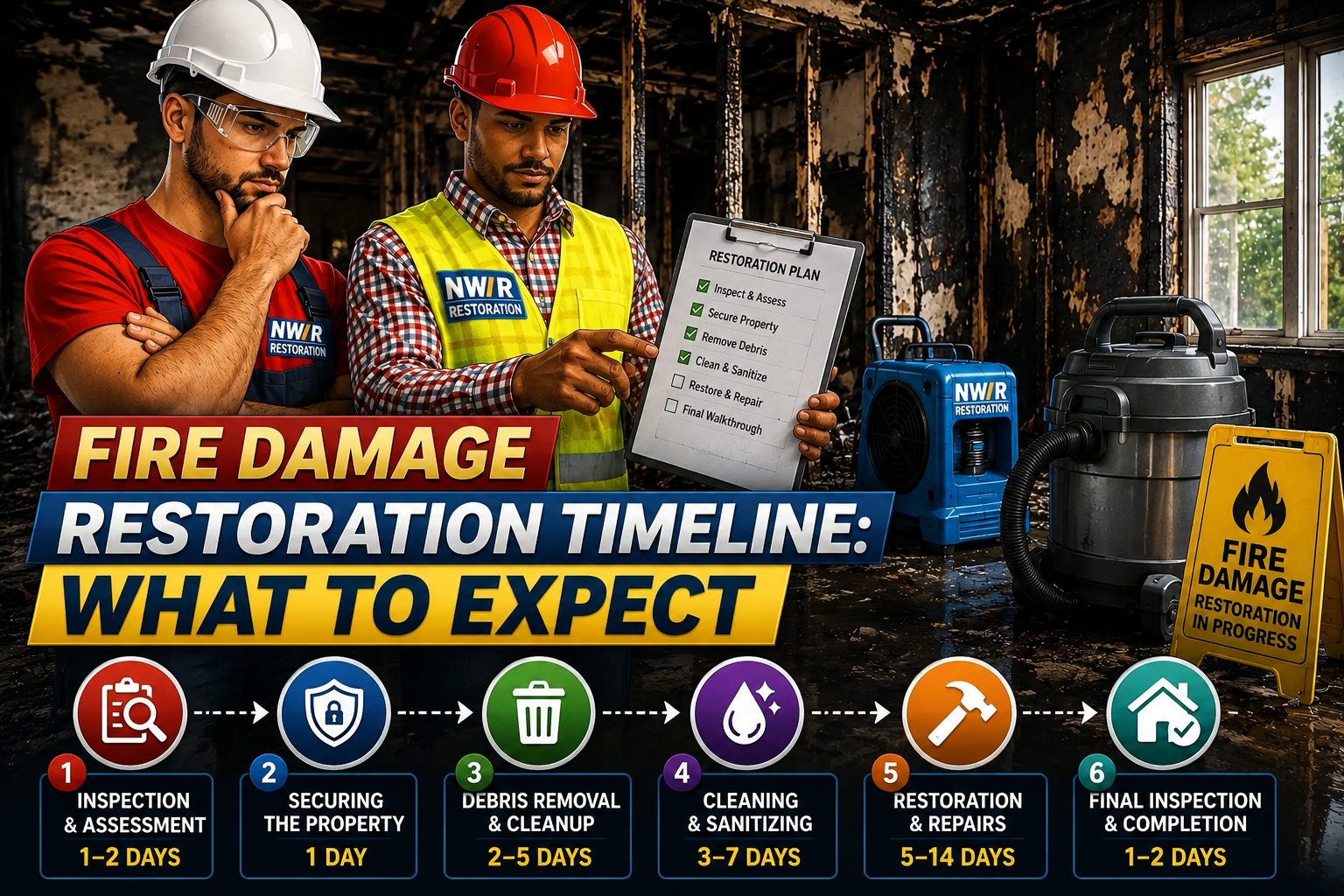
A fire can change a property in minutes, but restoring it to a safe, usable condition takes considerably longer. Even when the flames are extinguished, the damage may continue through smoke, soot, water, moisture, and structural problems. For homeowners and property managers, one of the first questions is usually simple: How long will fire damage restoration take?
There is no single answer because every fire is different. A small, contained kitchen fire may require only several days of cleaning and repairs, while extensive structural damage can turn the project into a process lasting several weeks or months.
Understanding the fire restoration timeline can make the situation easier to manage. It helps you know what restoration professionals are doing, why certain steps must happen before others, and what factors can affect the completion date.
What Is the Typical Fire Damage Restoration Timeline?
A typical restoration project can take anywhere from a few days to several months, depending on the severity of the fire and the extent of smoke, water, and structural damage.
Generally, the process follows several stages:
- Emergency response and property assessment
- Safety inspection and stabilization
- Water removal and drying
- Smoke and soot removal
- Cleaning and deodorization
- Damaged-material removal
- Structural repairs and reconstruction
- Final inspection and restoration
These stages may overlap. For example, drying can begin while damaged materials are being removed, while cleaning and smoke remediation may continue after the property has been secured.
How to Make Fire Restoration Faster
Property owners cannot control every factor affecting the restoration schedule, but several steps can help keep the process moving.
First, contact professional emergency restoration services as soon as the fire department has cleared the property for restoration work.
Avoid cleaning heavily damaged areas yourself before they have been documented. Moving or discarding damaged materials can make it harder to establish the full scope of the loss.
Keep communication open with your insurance company and restoration team. Provide requested documents promptly and ask questions whenever you are uncertain about the next stage.
It is also important not to begin major reconstruction before the damage has been properly evaluated. Cosmetic repairs may hide moisture, smoke contamination, or structural problems that need attention first.
Stage One: Emergency Response and Initial Assessment
The first stage begins as soon as the property is safe to enter. Restoration professionals inspect the building to determine what happened and identify immediate risks.
The assessment typically considers more than the visible fire damage. Professionals look for smoke and soot contamination, water intrusion caused by firefighting efforts, damaged electrical systems, weakened structural components, and areas where heat may have caused hidden deterioration.
The property may also need to be secured against weather, trespassing, or additional damage. Broken windows, damaged doors, and openings in the roof can allow rain and outside air to create additional problems.
During this stage, restoration professionals usually document the condition of the property. Photographs, moisture readings, and damage assessments can help establish the scope of the work and support communication with insurance providers.
Depending on the size of the property and severity of the fire, the initial assessment may take several hours or longer.
Stage Two: Making the Property Safe
Before restoration work can proceed, safety comes first.
A building affected by fire may have compromised floors, ceilings, walls, wiring, or plumbing. Smoke can also contaminate areas that were never directly touched by flames.
Professionals may restrict access to unsafe areas until they have been evaluated. In severe cases, structural engineers, electricians, plumbers, or other specialists may need to inspect specific systems.
Fire can also affect older construction materials that require additional testing before demolition or cleanup begins. If suspected hazardous materials are present, an expert asbestos testing company may be involved before certain materials are disturbed.
Stage Three: Water Removal and Structural Drying
Firefighters use large amounts of water to extinguish fires, and that water can create a second category of property damage.
Standing water may collect in floors, walls, ceilings, crawl spaces, basements, and other areas. If it is not removed promptly, moisture can contribute to mold growth, deterioration, unpleasant odors, and additional structural damage.
Restoration professionals may use pumps, wet vacuums, air movers, dehumidifiers, and moisture monitoring equipment to remove water and dry affected materials.
Stage Four: Smoke and Soot Removal
Once water and immediate safety issues have been addressed, restoration teams can focus heavily on smoke and soot.
Smoke is one of the most challenging parts of fire restoration because it can travel far beyond the area where the fire occurred. Smoke particles can enter rooms through ventilation systems, cracks, gaps, and open doors.
Soot can settle on walls, ceilings, furniture, flooring, appliances, and personal belongings. Different types of fires can also produce different forms of residue.
Restoration professionals use specialized cleaning methods based on the type of surface and contamination. Some materials can be cleaned and restored, while others may be too damaged or contaminated to save.
Stage Five: Odor Removal and Deodorization
Removing visible soot does not necessarily eliminate the smell of smoke.
Smoke odors can remain trapped inside porous materials such as carpeting, upholstery, curtains, insulation, wood, and drywall. HVAC systems can also distribute smoke odors throughout a building.
Professional deodorization focuses on identifying where odor has penetrated and treating those materials appropriately.
Depending on the severity of the fire, restoration professionals may use specialized deodorizing treatments and equipment. In some cases, heavily affected materials must be removed because cleaning alone cannot eliminate the odor.
Fire Damage Restoration vs. Reconstruction
It is important to understand the difference between restoration and reconstruction.
Restoration generally focuses on returning damaged areas to a usable condition through cleaning, drying, deodorization, and repairs.
Reconstruction involves rebuilding portions of the property that cannot be restored.
A property may therefore spend a few days in emergency restoration before moving into a reconstruction phase that takes several weeks or months.
Projects involving commercial and residential construction can also differ considerably because commercial buildings may have larger floor areas, more complex mechanical systems, specialized equipment, and additional regulatory requirements.
What Happens to Personal Belongings?
Not everything affected by fire automatically needs to be thrown away.
Restoration professionals can evaluate furniture, clothing, electronics, documents, artwork, and other belongings to determine whether they can be cleaned or restored.
Some items may require specialized off-site cleaning. Others may have suffered irreversible heat or smoke damage.
The sooner salvageable belongings are identified and treated, the better the chance of successful restoration.
When Does the Property Become Fully Restored?
The final stage occurs after cleaning, repairs, reconstruction, and inspections have been completed.
A final walkthrough can help identify unfinished work, remaining odors, cosmetic issues, or areas requiring additional attention.
The property should be returned to a safe and functional condition rather than simply looking clean.
For larger projects, final restoration may include replacing flooring, repainting walls, repairing electrical systems, restoring cabinetry, replacing roofing, and completing other structural or cosmetic work.
Want to learn more about professional fire damage restoration and get your property assessed? Visit the Contact page to connect with the restoration team and discuss your situation.
Final Thoughts
The fire restoration timeline can range from a few days for minor incidents to several months for major structural damage. The biggest factors are the severity of the fire, the amount of smoke and soot, water damage from firefighting, structural conditions, material availability, insurance requirements, and the extent of reconstruction required.
The best approach is not to focus only on finishing as quickly as possible. A proper restoration should address visible and hidden damage, remove smoke and moisture, restore affected materials where possible, and rebuild areas that cannot be salvaged.
FAQs
1. How long does fire damage restoration take?
Fire damage restoration can take a few days to several months, depending on the severity of the fire. Minor fires may require only cleaning and repairs, while extensive structural damage, smoke contamination, and reconstruction can significantly extend the timeline.
2. What are the main stages of fire damage restoration?
The typical fire restoration process includes emergency assessment, safety stabilization, water removal and drying, smoke and soot cleanup, deodorization, damaged-material removal, repairs or reconstruction, and final inspection. Some stages may happen at the same time.
3. How does water damage affect the fire restoration timeline?
Water used to extinguish a fire can create additional damage to floors, walls, ceilings, and other materials. Water removal and structural drying may need to happen before or alongside other restoration work to reduce the risk of mold, odors, and further deterioration.
4. Can smoke and soot damage be cleaned, or do materials need to be replaced?
It depends on the type and severity of the damage. Restoration professionals can often clean and restore certain furniture, flooring, walls, clothing, and other belongings. Materials that have severe heat, smoke, soot, or contamination damage may need to be removed and replaced.
5. What can delay a fire damage restoration project?
Several factors can extend the timeline, including extensive structural damage, hidden smoke or moisture, water damage from firefighting, hazardous materials, insurance requirements, specialized repairs, and delays in obtaining replacement materials. An early professional assessment can help establish a more realistic restoration schedule.


