
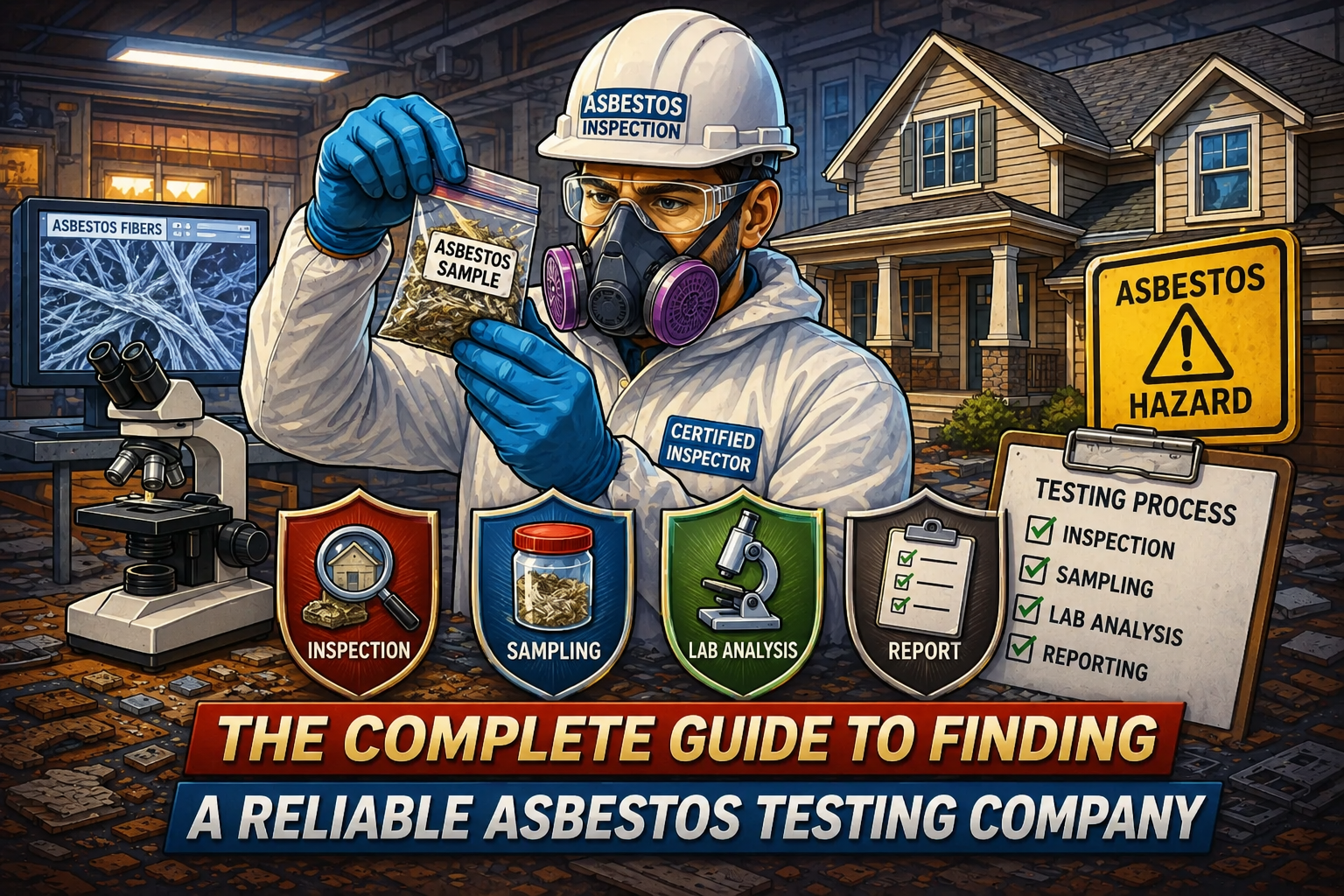
When dealing with older homes, commercial buildings, or renovation projects, one hidden hazard can create significant health and safety concerns: asbestos. Once widely used in construction materials for its durability and heat-resistant properties, asbestos is now known to pose serious health risks when its fibers become airborne and are inhaled.
Whether you’re purchasing an older property, planning renovations, responding to storm damage, or preparing for demolition, hiring a qualified asbestos testing company is one of the most important steps you can take to protect occupants, workers, and the surrounding environment.
This comprehensive guide explains everything you need to know about finding a reliable asbestos testing company, what services to expect, how testing works, and the key factors to consider before making your decision.
Understanding Asbestos and Why It Matters
Asbestos is a naturally occurring mineral composed of microscopic fibers. For decades, it was commonly used in building materials because of its:
- Fire resistance
- Durability
- Insulating properties
- Affordability
- Chemical resistance
Asbestos can be found in older:
- Roofing materials
- Floor tiles
- Pipe insulation
- Ceiling tiles
- Siding
- Joint compounds
- Textured coatings
- HVAC systems
While asbestos-containing materials may not be dangerous when left undisturbed, damage, renovation, or demolition can release fibers into the air.
Once inhaled, these fibers may contribute to serious health conditions, including:
- Asbestosis
- Lung cancer
- Mesothelioma
- Chronic respiratory illnesses
Because exposure risks can remain hidden for years, professional testing is essential whenever asbestos-containing materials are suspected.
What Does an Asbestos Testing Company Do?
An asbestos testing company specializes in identifying asbestos-containing materials within residential, commercial, industrial, and institutional properties.
Their services typically include:
- Property inspections
- Material sampling
- Laboratory analysis
- Risk assessments
- Regulatory compliance evaluations
- Clearance testing
- Project consultation
Professional testing provides property owners with accurate information regarding the presence and location of asbestos before renovation, repair, or demolition begins.
How Asbestos Testing Supports Renovation Projects
Construction projects often involve disturbing hidden materials.
Professional asbestos testing helps contractors:
- Develop safe work plans
- Meet regulatory requirements
- Avoid project interruptions
- Protect workers
- Reduce liability
For companies involved in residential & commercial construction, asbestos testing is often a critical pre-construction step.
Identifying asbestos early helps ensure smoother project execution and safer working conditions.
Why Professional Testing Is Necessary
Some property owners mistakenly assume they can identify asbestos through visual inspection alone. Unfortunately, asbestos-containing materials often resemble non-asbestos products.
Only laboratory testing can accurately determine whether asbestos is present. Professional testing helps:
- Prevent accidental exposure
- Meet regulatory requirements
- Protect construction workers
- Support renovation planning
- Avoid costly project delays
- Ensure proper remediation if needed
Without proper testing, disturbing asbestos-containing materials can create serious health and legal liabilities.
When Should You Hire an Asbestos Testing Company?
Several situations warrant professional asbestos testing.
Before Renovation Projects
Renovation activities often disturb walls, ceilings, flooring, and insulation. Testing before construction begins helps identify hazards and avoid exposure.
Before Property Demolition
Many jurisdictions require asbestos surveys before demolition permits are issued. Testing ensures compliance and safe demolition practices.
During Real Estate Transactions
Buyers and sellers frequently request asbestos evaluations to understand potential risks and liabilities.
Following Property Damage
Water, fire, or structural damage may disturb building materials that contain asbestos. Testing can help determine whether hazardous materials have been compromised.
In Older Buildings
Properties built before modern asbestos regulations may contain asbestos in multiple locations. Routine testing can help identify concerns before major projects begin.
Understanding the Asbestos Testing Process
Many property owners are unfamiliar with how asbestos testing works.
Understanding the process can help set realistic expectations.
Step 1: Initial Consultation
The process usually begins with a discussion regarding:
- Property age
- Planned renovations
- Suspected materials
- Existing concerns
Inspectors gather information to prepare for the site visit.
Step 2: Property Inspection
Inspectors conduct a thorough examination of potentially affected areas.
Materials commonly evaluated include:
- Flooring
- Ceiling systems
- Insulation
- Roofing components
- Wall materials
- Pipe coverings
The goal is to identify suspect materials requiring laboratory analysis.
Step 3: Sample Collection
Small material samples are carefully collected using safety procedures designed to minimize fiber release.
Sampling locations may include:
- Drywall compounds
- Vinyl flooring
- Ceiling tiles
- Insulation products
Step 4: Laboratory Testing
Collected samples are submitted to accredited laboratories.
Microscopic analysis determines whether asbestos fibers are present.
Step 5: Results and Recommendations
The company provides findings and discusses appropriate next steps if asbestos is detected.
Recommendations may include:
- Monitoring
- Encapsulation
- Removal
- Additional testing
Asbestos Testing for Commercial Properties
Commercial buildings often contain larger quantities of suspect materials.
Testing is particularly important for:
- Office buildings
- Retail centers
- Warehouses
- Manufacturing facilities
- Schools
- Healthcare facilities
Companies offering residential commercial remodeling services frequently rely on asbestos testing to ensure projects proceed safely and efficiently.
Commercial property owners benefit from comprehensive inspections before major improvements begin.
The Connection Between Restoration Services and Asbestos
Property damage can expose materials that were previously undisturbed.
For example:
Water Damage
Following severe Water Damage Kennewick WA restoration projects, damaged drywall, insulation, or flooring may require asbestos evaluation before repairs begin.
Fire Damage
After Fire Damage Kennewick WA incidents, structural materials may become compromised, increasing the importance of asbestos assessment before rebuilding.
Disaster Recovery
Many providers offering emergency restoration services coordinate with asbestos professionals when hazardous materials are suspected.
Testing ensures restoration efforts proceed safely and in compliance with applicable regulations.
Understanding Asbestos Regulations
Federal, state, and local regulations govern asbestos handling, testing, and removal.
Requirements may vary depending on:
- Property type
- Building age
- Renovation scope
- Demolition activities
Professional testing companies remain current with applicable regulations and can help property owners navigate compliance requirements.
Failure to comply with asbestos regulations can result in:
- Fines
- Project delays
- Legal liabilities
- Health risks
The Importance of Accurate Results
Accurate testing supports:
- Health protection
- Safe renovations
- Construction planning
- Regulatory compliance
- Property value preservation
False negatives can expose occupants and workers to unnecessary risk. False positives may create unnecessary expenses. Working with an experienced asbestos testing company minimizes these concerns.
Don’t leave safety to chance. Contact our experienced team today to protect your property, your project, and the people who matter most.
Final Thoughts
Finding a reliable asbestos testing company is a critical step in protecting both property and health. Whether you’re planning renovations, responding to property damage, preparing for demolition, or purchasing an older building, professional testing provides the information needed to make safe and informed decisions.
The best asbestos testing companies combine industry expertise, proper certifications, accredited laboratory analysis, and clear reporting to deliver accurate results you can trust.
By investing in professional testing before beginning construction or restoration work, property owners can reduce risks, avoid costly delays, maintain regulatory compliance, and ensure safer environments for everyone involved.
Frequently Asked Questions
1. Why should I hire a professional asbestos testing company?
Professional companies use certified inspectors and accredited laboratories to accurately identify asbestos-containing materials while minimizing exposure risks.
2. How long does asbestos testing take?
Most inspections can be completed within a few hours, while laboratory results are often available within several days depending on the testing provider.
3. Can asbestos be identified without laboratory testing?
No. Many asbestos-containing materials look similar to non-asbestos products, making laboratory analysis necessary for accurate identification.
4. Is asbestos testing required before renovation projects?
In many situations, especially involving older buildings, testing is strongly recommended and may be legally required before renovation or demolition activities begin.
5. What happens if asbestos is found during testing?
If asbestos is detected, the testing company will typically provide recommendations regarding monitoring, encapsulation, removal, or additional evaluation based on the material’s condition and planned project activities.


