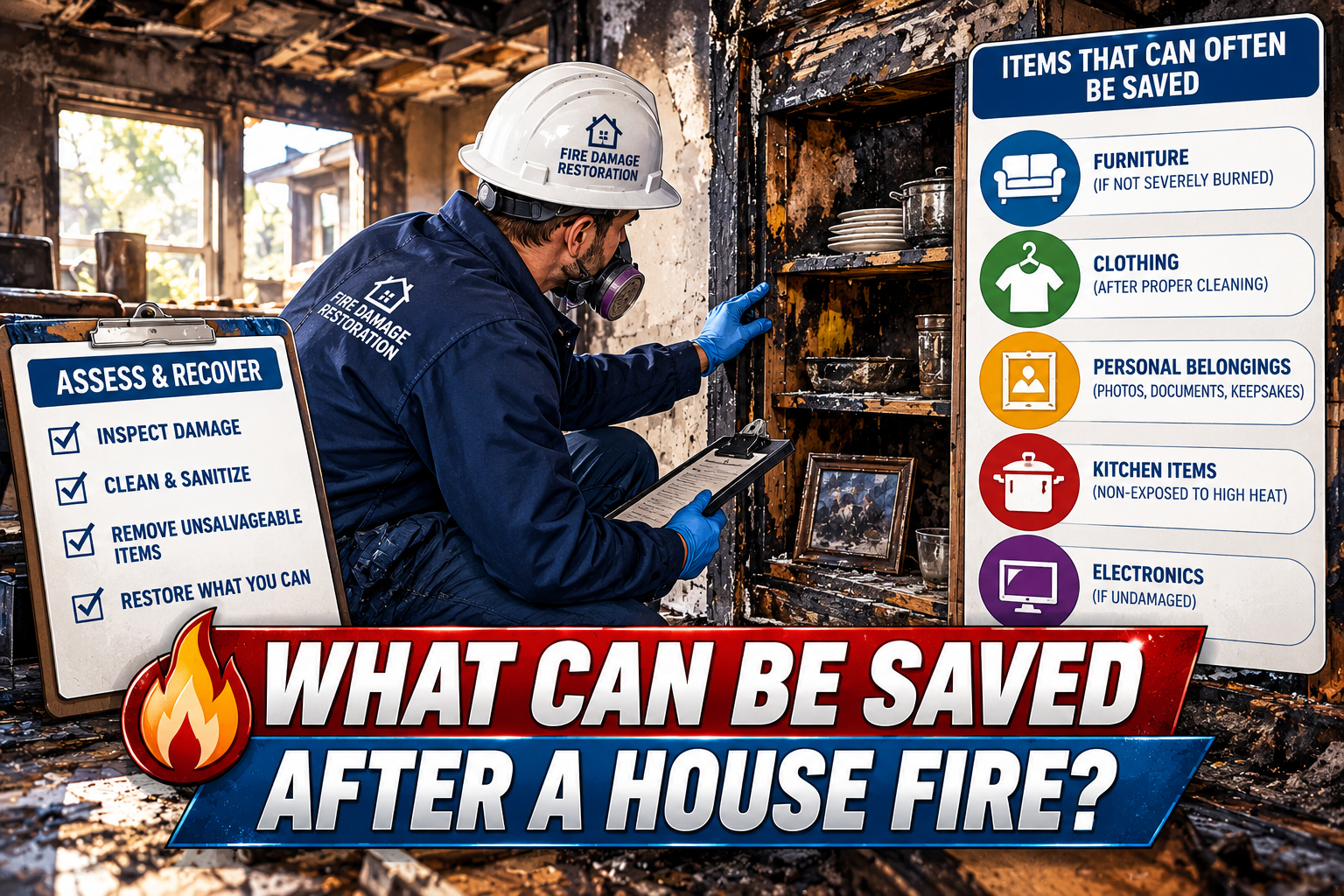
A house fire can be overwhelming, leaving smoke, soot, water, and structural damage behind. However, not everything affected by a fire necessarily needs to be thrown away. Depending on the severity and type of damage, many household belongings, building materials, and personal possessions can be cleaned, restored, or repaired.
Understanding what can be saved after a fire can help homeowners make informed decisions during the recovery process. The extent of damage, the type of material, how long the item was exposed to smoke or water, and whether it can be safely cleaned all influence the restoration process.
For homeowners researching Fire Damage in Kennewick, professional assessment is an important first step. Restoration specialists can inspect affected areas and belongings and help determine which items may be salvageable and which may need replacement.
What Determines Whether an Item Can Be Saved?
Several factors influence whether an item can be restored after a house fire.
Type and Extent of Damage
An item exposed directly to flames may have substantially different damage from something affected only by smoke or soot. Direct fire exposure can destroy materials, while smoke and soot may leave surfaces stained or coated with residue that can sometimes be removed.
Heat can also cause damage without direct contact with flames. High temperatures may warp plastics, crack glass, weaken certain materials, or damage electronics.
Smoke and Soot Exposure
Smoke can travel throughout a home, affecting rooms far from the original fire. Soot may settle on walls, ceilings, furniture, clothing, appliances, and personal possessions.
The type of smoke residue also matters. Different materials that burn during a fire can produce different types of residue, some of which may be more difficult to remove than others.
Water and Firefighting Chemicals
Fire suppression often introduces significant amounts of water into a property. This can create a second category of damage affecting flooring, drywall, furniture, electronics, and personal belongings.
Homeowners may also need to consider related Water Damage Kennewick WA restoration needs when water from firefighting efforts or damaged plumbing has affected the structure.
How Quickly Restoration Begins
Time can be an important factor. Smoke residue can become more difficult to remove from certain surfaces when it remains untreated. Water exposure can also contribute to deterioration if wet materials are not dried promptly.
For these reasons, professional inspection and appropriate stabilization should generally begin as soon as it is safe to enter the property.
For professional fire damage assessment, restoration, and rebuilding assistance, visit our Contact page to learn more about our services and connect with our team. We can help you understand the next steps for restoring your property safely and efficiently.
Household Items That May Be Salvageable
Not every item exposed to smoke, soot, or water is automatically ruined. Depending on the circumstances, several categories of household belongings may be restorable.
Furniture
Wood furniture may sometimes be cleaned, deodorized, refinished, or repaired after smoke exposure. The possibility of restoration depends on the extent of charring, staining, odor, and structural damage.
Upholstered furniture can be more complicated because smoke and odor may penetrate fabrics and cushioning. Professional cleaning may be possible when the damage is limited, but heavily contaminated or structurally damaged pieces may not be suitable for restoration.
Clothing and Textiles
Clothing, curtains, bedding, rugs, and other washable textiles may be recoverable after smoke exposure. Specialized cleaning processes can sometimes remove soot, smoke residue, and odors.
However, textiles that have been directly burned, heavily contaminated, or exposed to certain chemicals may require replacement.
Books and Documents
Books, photographs, documents, and other paper materials can sometimes be salvaged, particularly when they have suffered smoke or limited water damage rather than direct fire exposure.
Specialized restoration techniques may be used for valuable documents and photographs. Because paper is highly sensitive to moisture and mold growth, prompt handling is important when water has affected these materials.
Glass and Metal Items
Glass, stainless steel, and some metal objects may be relatively durable. They can sometimes be cleaned and restored if they have not been cracked, melted, structurally weakened, or severely corroded.
Smoke and soot deposits may leave visible discoloration, but surface contamination does not necessarily mean the item itself is permanently destroyed.
Appliances and Electronics
Electronics require additional caution. Even when an appliance looks intact, smoke, soot, heat, or water may have affected internal components.
Do not automatically turn on electronics that have been exposed to fire or firefighting water. A qualified professional should determine whether an item can be safely evaluated, cleaned, repaired, or reused.
Structural Components That May Be Saved
The structure of a home may also contain components that can be repaired rather than completely replaced.
Framing
Wood framing that has experienced limited smoke exposure may potentially be cleaned and restored. However, structural members that have been severely charred or weakened by heat may require replacement.
A professional inspection is particularly important when load-bearing components may have been affected.
Drywall
Drywall that has only limited surface contamination may sometimes be cleaned or treated. Material that has absorbed significant amounts of water, sustained extensive fire damage, or developed other serious deterioration may need to be removed.
Flooring
Some flooring materials can be cleaned and restored after smoke exposure. Hardwood, tile, and other durable surfaces may be salvageable depending on the extent of damage.
Carpet and padding can be more difficult to restore when exposed to substantial smoke, soot, or contaminated water.
Cabinets and Countertops
Cabinetry may be repairable if the damage is limited to smoke residue or surface contamination. Severe charring, swelling from water exposure, or structural deterioration may make replacement necessary.
Countertops made from durable materials may sometimes be cleaned and restored, depending on heat and smoke exposure.
What About Personal Belongings?
Personal belongings can have significant sentimental or financial value, making the decision to discard them particularly difficult.
Items such as jewelry, artwork, family photographs, heirlooms, collectibles, and certain antiques may sometimes be restored through specialized cleaning or conservation methods.
Before throwing away valuable or sentimental possessions, document their condition and discuss them with a restoration professional. Some items that initially appear ruined may have restoration options that are not immediately obvious.
Insurance documentation can also be important. Photographing damaged belongings and keeping records of restoration-related decisions can help homeowners organize information for their insurance claim.
When Professional Fire Restoration Is Necessary
A professional restoration assessment can help separate salvageable materials from items that are beyond practical repair.
A qualified emergency restoration contractor may evaluate structural damage, smoke and soot contamination, water damage, and affected contents. Depending on the property, restoration may include:
- Emergency board-up and property stabilization
- Smoke and soot removal
- Water extraction
- Structural drying
- Cleaning and deodorization
- Contents cleaning
- Odor control
- Damaged material removal
- Reconstruction and repairs
The restoration process should be based on the actual conditions of the property rather than assuming everything affected by smoke or water needs to be discarded.
Safety Considerations After a House Fire
Safety should take priority over salvage. Homeowners should not enter a fire-damaged structure until the appropriate authorities or qualified professionals have determined that it is safe.
Fire can compromise structural components even when the damage is not immediately visible. Electrical systems, gas lines, roofing components, ceilings, and walls may also present hazards.
Smoke and soot can contain contaminants, while damaged materials may create additional risks during cleanup. Protective equipment and appropriate procedures may be necessary when handling fire-damaged materials.
If renovation or demolition is planned in an older property, additional precautions may also be required. Depending on the age and condition of the building, asbestos testing may be appropriate before disturbing certain suspect materials.
A qualified asbestos testing company can assess suspected materials and determine whether testing is necessary before restoration or construction activities proceed.
Restoration vs. Replacement
One of the most important decisions after a fire is determining what should be restored and what should be replaced.
Restoration may be appropriate when:
- Damage is limited or primarily cosmetic.
- The material remains structurally sound.
- Smoke or soot can be effectively removed.
- Odors can be treated.
- The cost and process of restoration are reasonable.
- The item has sentimental or financial value worth preserving.
Replacement may be necessary when:
- Materials are severely charred.
- Structural integrity has been compromised.
- Contamination cannot be safely removed.
- Materials have suffered extensive water deterioration.
- Restoration would not provide a safe or practical result.
The goal is not simply to save as many things as possible. It is to restore the property safely while making practical decisions about which materials and belongings are worth preserving.
Rebuilding After Fire Damage
Some homes experience damage significant enough to require reconstruction. Once the property has been cleaned, stabilized, and appropriately assessed, rebuilding may involve drywall replacement, flooring installation, cabinetry, electrical work, roofing repairs, or other construction tasks.
Depending on the scope of the project, residential & commercial construction professionals may assist with restoring damaged portions of the property.
A fire can also provide an opportunity to update an affected area rather than simply reproducing its previous design. Homeowners may choose new finishes, improved layouts, updated cabinets, or other improvements as part of the rebuilding process.
How to Protect Salvageable Items During Restoration
Once professionals have identified items that may be saved, they should be separated from heavily damaged materials whenever possible.
Keep salvageable belongings in a clean, dry area away from ongoing demolition and contaminated materials. Avoid attempting aggressive cleaning methods without understanding the material involved, as improper cleaning can sometimes cause additional damage.
Valuable documents, artwork, photographs, and antiques may require specialized handling. In these situations, professional contents restoration or conservation services may be appropriate.
Final Thoughts
A house fire does not necessarily mean everything inside the property has been lost. Furniture, clothing, documents, appliances, flooring, cabinets, personal belongings, and some structural components may be salvageable depending on the type and extent of damage.
The most important step is to avoid making immediate assumptions about what can or cannot be saved. A professional assessment can identify smoke, soot, heat, and water damage and help determine which materials can be cleaned, repaired, restored, or safely replaced.
FAQs
1. Can belongings be saved after a house fire?
Yes. Many belongings may be salvageable depending on the extent of fire, smoke, soot, heat, and water damage. Furniture, clothing, documents, glass, metal items, and some personal possessions may be cleaned, repaired, or restored.
2. What items are most likely to be salvageable after a fire?
Items with limited smoke, soot, or water exposure may have a better chance of restoration. Glass, metal, some wood furniture, washable textiles, certain flooring materials, and personal belongings may be salvageable when they remain structurally sound.
3. Can smoke-damaged furniture and clothing be restored?
In some cases, yes. Professional cleaning and deodorization may remove smoke residue and odors from furniture and textiles. Items that are heavily burned, structurally damaged, or severely contaminated may need to be replaced.
4. Should I throw away items damaged by fire?
Not necessarily. Some items that appear severely damaged may still have restoration options. Before discarding valuable, sentimental, or potentially salvageable belongings, consider having them evaluated by a fire restoration professional and document their condition for insurance purposes.
5. Can a house be restored after significant fire damage?
Yes, depending on the extent of the damage. Restoration may include smoke and soot removal, water extraction, structural drying, cleaning, deodorization, material removal, repairs, and reconstruction. Severely damaged structural components may require replacement.
6. When should I contact a fire damage restoration professional?
Contact a professional as soon as the property has been determined safe to enter. Early assessment can help identify salvageable belongings, address smoke and water damage, stabilize the property, and determine which materials require cleaning, repair, or replacement.


